
Full Mouth Reconstruction Cost Factors in Mercer County, NJ: Why Treatment Plans Vary
Two patients in Mercer County can sit in the same waiting room, hear the same words from their dentist, “you need full mouth reconstruction,” and still walk away with completely different treatment plans. That’s because the phrase describes a goal, not a fixed procedure.
One Princeton patient might need several crowns and replacement of a few missing teeth through fairly routine restorative dentistry. Another might need extractions, dental implants in Princeton, NJ, bone grafting, provisional restorations, and full-arch rehabilitation. Both patients have full mouth reconstruction in Mercer County, yet their mouths, their procedures, and their treatment timelines look nothing alike.
This is why full mouth reconstruction in Princeton, NJ, or anywhere else in Mercer County, does not come with one standard cost. Cost reflects the number of teeth involved, the procedures required, how implants and surgery factor in, and how carefully the bite and final restorations are planned. Dr. Michael Scalia, a prosthodontist serving Mercer County, and the team at Lawrenceville Smiles walk patients through these variables so they understand what actually drives their treatment plan, rather than guessing at a number that may not apply to their situation.
Why Full Mouth Reconstruction Does Not Have One Standard Cost
Full mouth reconstruction is a form of comprehensive restorative dentistry, not a single treatment with a set price. Its goal is to restore function, stability, chewing ability, and long-term dental health across multiple teeth or an entire arch. Because the starting condition of every mouth is different, treatment can range from relatively limited restorative rehabilitation to complex, implant-supported reconstruction.
This is the core reason cost varies so widely. A patient who needs six new crowns has a very different scope of treatment complexity than a patient who needs a full arch rebuilt with implants, grafting, and a fixed prosthesis. Both fall under the umbrella of dental reconstruction, but they involve different diagnostics, different lab work, and different timelines. Patients can review restorative dentistry options at Lawrenceville Smiles to see the range of treatments, from single crowns to more extensive restorative dentistry in Mercer County, that can factor into a plan like this.
The Number of Teeth Being Treated Changes the Scope
Restoring six compromised teeth is a fundamentally different project than rebuilding an entire arch or both arches. The number of teeth treated affects nearly every part of a treatment plan, including:
- Diagnostic planning — more teeth involved means more imaging, models, and bite analysis before treatment begins
- Number of restorations — each crown, bridge, or implant crown is planned and fabricated individually
- Chair time — extensive restorative treatment naturally requires more appointments
- Laboratory work — multiple damaged teeth often mean multiple lab cases running at once
- Provisional restorations — more teeth typically means more temporary restorations to manage during treatment
- Maintenance needs — a full arch reconstruction has different long-term upkeep than a handful of crowns
A patient needing complete mouth restoration across both arches will always involve more moving parts than one needing multi-tooth restoration limited to a few teeth. That difference in scope, not a fixed fee schedule, is what separates one treatment plan from another.
Saving Natural Teeth vs. Replacing Them Changes the Plan
Not every compromised tooth needs to come out. Some teeth can be restored with crowns, onlays, or bridges and kept as part of the long-term plan. Others have a poor tooth prognosis and are better addressed through extraction and replacement, often with dental implants.
This mix of saving and replacing teeth is one of the biggest variables in restorative treatment planning. A mouth that needs mostly crowns and bridges is a different project than one that needs a combination of crowns and bridges plus implant-based tooth replacement. The right balance depends on each tooth’s individual prognosis, not a general rule about age or number of remaining teeth.
How Dental Implants Affect Full Mouth Reconstruction Cost
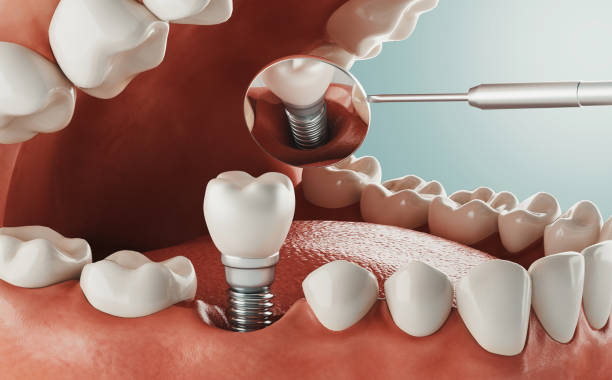
Implant-supported treatment often adds diagnostic, surgical, restorative, and maintenance layers that a crown-only case doesn’t require. Beyond the restorative work itself, dental implants in Mercer County typically involve additional diagnostic imaging, a surgical phase, a healing period, and long-term maintenance. A full mouth reconstruction built around dental implants in Princeton, NJ, or full arch dental implants elsewhere in the region, is planned differently from one built entirely around natural-tooth restorations, and that difference in implant restoration planning shows up directly in the scope of the case.
Implant Count and Implant Distribution Matter
Not all implant treatment looks the same. Depending on the patient’s needs, a plan might involve:
| Implant Approach | General Description |
|---|---|
| One or Two Implants | Replacing isolated missing teeth without affecting the full arch |
| Several Implants Supporting a Bridge | Replacing multiple missing teeth in one area with a fixed bridge |
| Implant-Supported Dentures | A removable denture stabilized by a smaller number of implants |
| All-on-4 Dental Implants | A full arch of teeth supported by four strategically placed implants |
| All-on-6 Dental Implants or All-on-X | A full arch supported by additional implants for added stability |
| Full-Arch Fixed Restorations | A permanent, non-removable full-arch prosthesis |
The implant count and how those implants are distributed directly influence surgical complexity and laboratory design. A plan built around an implant-supported bridge is a very different laboratory case than one built around full-arch implants supporting a fixed prosthesis. Prosthodontic planning for cases like All-on-4 requires mapping exactly where each implant will go, how it will interact with the jawbone, and how the final prosthesis will be designed around that placement.
Bone Grafting or Sinus Procedures Can Add Complexity
Some patients don’t have enough bone volume to support their desired implant plan right away. In these cases, treatment may include bone grafting, ridge augmentation, a sinus lift, or other site development to prepare the area for implant placement. For patients considering dental bone grafting in Lawrenceville, NJ, this sometimes means sinus surgery in Lawrenceville when the upper jaw lacks adequate height, along with other implant site preparation to build bone support for implants. Not every patient needs this step, but when it’s required, it adds a preparatory phase before implants can move forward. For a deeper look at whether bone loss means a patient needs grafting before implants, that decision is always based on the individual’s bone volume and implant plan, not a blanket rule.
Same-Day and Immediate-Load Cases Require Different Planning
Same-day implants and immediate-load implants, where a patient leaves with temporary implant teeth on the same day as surgery, require careful case selection. The implants need sufficient initial stability, the provisional restoration needs to be planned, and the dental laboratory needs to coordinate closely with the surgical timeline. Not every patient is a candidate, and determining eligibility is part of the diagnostic process rather than a standard offering.
Surgical Procedures Are One of the Biggest Variables in Complex Cases
Some full mouth reconstruction cases involve significant surgical preparation, including tooth extractions, bone grafting, or implant surgery. Others are almost entirely restorative surgery, with very little oral surgery required. This distinction, more than any single factor, often separates a straightforward plan from a complex one.
Extractions Before Reconstruction
When teeth are non-restorable, whether from advanced decay, fracture, or failing prior dental work, extraction may be part of the plan. The number and complexity of failing teeth requiring extraction shapes how much surgical work happens before reconstruction begins, whether that means a few tooth extractions in Lawrenceville or a more extensive extraction plan elsewhere in Mercer County. Strategic extraction decisions are based on each tooth’s individual prognosis, not on removing every remaining tooth as a default. This conservative approach to extraction before implants keeps the plan focused on what actually needs to change.
Bone and Gum Preparation Before Final Restorations
Periodontal stability matters just as much as the teeth themselves. Gum health and bone support may need to be addressed and stabilized before restorative work begins. Tissue preparation ensures that crowns, bridges, or implant restorations have a healthy, stable foundation, which affects both the timeline and the sequence of treatment.
Why Temporary Restorations Can Affect the Overall Treatment Plan
Provisional restorations are not simply “temporary teeth” to wear while waiting for the final result. In full mouth rehabilitation, they often serve as a trial bite, testing and refining occlusion and function before final restorations are completed.
Temporary Teeth Help Test the New Bite
During the provisional phase, temporary restorations allow the dental team and the patient to evaluate several things together, including:
- Bite height and vertical dimension
- Chewing comfort and occlusion
- Jaw position
- Tooth shape and appearance
- Speech
This bite testing period gives both the dentist and the patient a chance to make adjustments before committing to permanent materials. A provisional bite that feels off can be modified; a final restoration is much harder to change.
Provisional Restorations Add Laboratory and Treatment Phases
Each round of provisional restorations involves its own design, fabrication, adjustment, and follow-up. In more complex cases, this can mean multiple rounds of refinement. Each phase adds time and laboratory coordination, which is part of why a complex reconstruction unfolds over a longer timeline than a single crown.
Restorative Materials Can Change Treatment Complexity
Different dental materials, crown materials, and prosthodontic design choices require different manufacturing processes, different clinical preparation, and different levels of laboratory work. A full arch restoration built with an implant prosthesis, for example, calls for different fabrication than a single crown. No single material is universally “best.” The right choice depends on the specific restoration, its location in the mouth, and how it needs to function.
Crowns, Bridges, and Full-Arch Prostheses Are Different Restorations
A single dental crown, dental bridges, and a full-arch prosthesis are not scaled-up or scaled-down versions of one another. They differ in size, design, the support they require, and the laboratory complexity involved in fabricating them. An implant-supported bridge, for example, requires precise coordination between the implant positions and the final prosthetic design in a way that a traditional crown does not.
Material Selection Depends on Function and Bite Forces
Choosing restorative materials means weighing several functional factors together:
- Whether the patient grinds or clenches their teeth
- What the restoration will bite against (opposing teeth)
- Whether the restoration is implant-supported or tooth-supported
- Aesthetic goals
- Long-term maintenance needs
Patients who grind or clench, a condition known clinically as bruxism, place additional force on their restorations. According to the National Institute of Dental and Craniofacial Research, bruxism can lead to flattened, chipped, or cracked teeth and worn tooth enamel over time. That added force is a real factor in restoration durability, which is why prosthetic materials are chosen to hold up under heavier bite forces.
Why Treatment Phases and Timeline Influence Cost
Complex full mouth reconstruction cases are typically completed through staged treatment rather than in a single appointment. Each of these treatment phases addresses a different part of the overall plan, and skipping ahead in the full mouth reconstruction timeline can compromise the final result. Careful restorative sequencing, deciding what happens first, second, and last, is often just as important as the individual procedures themselves.
Disease Control and Stabilization May Come First
Before definitive reconstruction begins, active problems like decay, infection, gum disease, or failing existing restorations often need to be brought under control. This foundational work protects the long-term success of everything built afterward.
Surgical Healing Can Create Additional Treatment Stages
When a plan includes implant placement or bone grafting, healing time is part of the process. Implant healing, bone graft healing, and general tissue stabilization all need to progress before the next phase can begin. Every patient heals differently, so this stage is planned around biological readiness rather than a fixed calendar date.
Final Restorations Come After the Foundation Is Stable
Definitive prosthetics, the final crowns, bridges, or implant restorations, are placed once the appropriate biological and functional conditions are established. Moving to final restorations too early can undermine the stability of the entire plan, which is why careful sequencing matters as much as the procedures themselves.
How Bite Complexity Can Change the Treatment Plan
There’s an important distinction between true full mouth reconstruction and simple cosmetic treatment. Whitening teeth or placing veneers on a few front teeth does not require rebuilding occlusion or how the bite functions. Rebuilding a collapsed or unstable bite is a different kind of project entirely, closer to bite rehabilitation than a cosmetic touch-up, and it requires far more prosthodontic planning. Patients can review how grinding and clenching affect implant-supported restorations to understand why bite forces play such a large role in this kind of planning.
Severe Tooth Wear Can Require More Extensive Reconstruction
Long-term grinding, erosion, or general wear can affect multiple teeth at once and gradually reduce the space available for new restorations. When wear has progressed significantly, rebuilding the bite often means restoring more teeth than the patient initially expects, simply because so many teeth have been affected by the same underlying process.
Opposing Teeth Determine How New Restorations Are Designed
A new implant bridge that bites against natural teeth is planned differently than one that bites against another implant prosthesis or a denture. This relationship, known as opposing dentition, affects force distribution and occlusal planning throughout the mouth. Every restoration has to work in harmony with what it meets on the opposite arch, which adds another layer of design consideration to implant restoration design.
Why a Prosthodontic Evaluation Matters Before Discussing Cost
An accurate cost conversation depends on real answers to several questions: what can be saved, what must be replaced, how many implants are needed, whether surgery is required, what type of prosthesis fits the situation, and how the bite needs to be rebuilt. None of these questions can be answered without a hands-on evaluation.
This is where Dr. Michael Scalia’s prosthodontic training matters. As a prosthodontist in Lawrenceville, Dr. Scalia has completed additional years of specialized training beyond dental school focused specifically on restoring and replacing teeth. According to the American College of Prosthodontists, prosthodontists complete three to four years of advanced training after dental school in the diagnosis, treatment planning, and rehabilitation of patients with missing or damaged teeth. That background is part of why patients throughout Princeton and Mercer County turn to Lawrenceville Smiles for restorative treatment planning rather than piecing together a plan procedure by procedure.
Diagnosis Comes Before the Final Treatment Estimate
Imaging, a clinical examination, bite analysis, and restorative planning all happen before a treatment scope can be established. Skipping this step and asking for a number up front usually means getting an estimate that doesn’t reflect the actual condition of the mouth.
A Higher Procedure Count Does Not Always Mean a Better Plan
More procedures are not automatically a better outcome. The objective of prosthodontic planning is finding the appropriate long-term solution for that specific mouth, not maximizing the number of things done to it. A conservative, well-sequenced plan often serves patients better than an aggressive one.
FAQs About Full Mouth Reconstruction Cost in Mercer County
Why does full mouth reconstruction cost vary so much?
Cost varies because full mouth reconstruction describes a category of treatment, not one procedure. The number of teeth involved, whether implants and surgery are needed, the materials used, and how many treatment phases are required all shape the final scope, and no two patients need the same combination.
Does full mouth reconstruction always require dental implants?
No. Some patients can achieve full mouth reconstruction through natural-tooth restorations like crowns and bridges alone. Others need dentures, dental implants, or a combination of approaches. The right mix depends on which teeth can be saved and which need to be replaced.
Does bone grafting increase treatment complexity?
Yes, when it’s needed to support the planned implants. Bone grafting adds a preparatory phase when a patient doesn’t have enough bone volume, which increases the number of treatment stages and the overall timeline. Not every implant patient needs bone grafting; whether it’s necessary depends on an individual evaluation of bone volume and implant placement.
Is All-on-4 considered full mouth reconstruction?
All-on-4 can be one component of a broader full mouth reconstruction plan, particularly for patients replacing an entire arch of teeth. Whether it fits into a larger reconstruction plan or stands as a treatment on its own depends on the condition of the rest of the mouth.
Does restoring both arches cost more than restoring one?
Restoring both arches generally involves a larger scope of treatment than restoring a single arch, simply because there are more teeth, more restorations, and often more phases involved. The exact difference in scope depends on the specific procedures needed in each arch rather than a fixed multiplier.
How can Princeton patients get an accurate full mouth reconstruction treatment plan?
An accurate plan starts with a comprehensive evaluation that includes imaging, a clinical exam, and bite analysis. This evaluation identifies which teeth can be saved, which need replacement, and what type of restorations and treatment sequencing make sense for that individual mouth.
Get a Personalized Full Mouth Reconstruction Evaluation Near Princeton, NJ
The only reliable way to understand the scope of a full mouth reconstruction is a personalized evaluation, not a general estimate. Every treatment plan reflects the specific condition of that patient’s teeth, gums, bone, and bite.
Patients throughout Princeton, Pennington, Ewing, Lawrenceville, and the surrounding Mercer County communities can schedule a consultation with Lawrenceville Smiles to learn which treatment path fits their oral health, comfort, and long-term goals.

Categories: Dental Implants | Published: September 7, 2026
