
All-on-4 vs All-on-6: When Do Additional Implants Change the Treatment Plan?
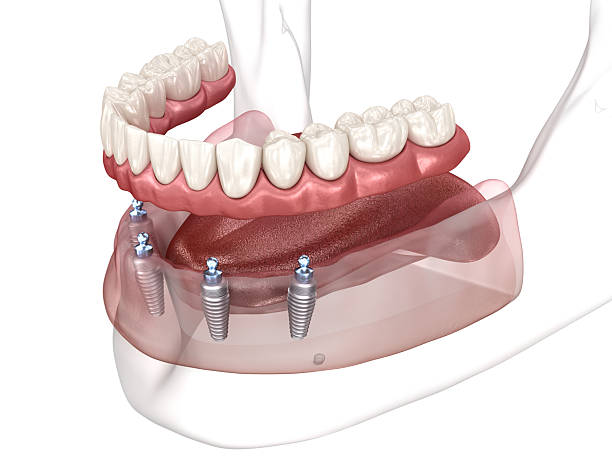
All-on-4 and All-on-6 are both full-arch tooth replacement approaches. All-on-4 typically uses four dental implants to support a full arch of teeth, and All-on-6 typically uses six. Six implants are not automatically the better choice.
The right number depends on your bone anatomy, the available implant sites, the shape of your jaw, your biting forces, and the design of the final prosthesis. Additional implants make sense when they add meaningful support to the restoration or improve how the prosthetic load is distributed. Those benefits always have to be weighed against surgical complexity and the bone you actually have.
For patients in Princeton and across Mercer County comparing All-on-4 vs All-on-6, the answer comes from planning, not from picking a number. At Lawrenceville Smiles in Lawrenceville, NJ, full-arch dental implant options start with an evaluation of four things: implant count, bone support, implant distribution, and the design of your final teeth. This article explains how each one shapes the recommendation.
What Is the Difference Between All-on-4 and All-on-6 Dental Implants?
The main difference is the number of implants supporting a full-arch prosthesis: four or six per arch. But implant count is only one part of treatment design. Implant position, bone support, bite forces, and the final restoration matter just as much.
In the approaches discussed here, the final restoration is usually a fixed implant-supported bridge that you cannot remove at home. That is different from a removable implant-supported overdenture, which snaps onto implants and comes out for cleaning.
How All-on-4 Supports a Full Arch With Four Implants
The All-on-4 concept uses four dental implants to support a full-arch restoration. The two front implants usually sit upright. The two back implants are often tilted when clinically appropriate.
Angling those posterior implants can help the surgeon use available bone and avoid anatomical structures like the sinus or a nerve. It can also extend support farther back under the fixed implant bridge. Every case is different, though, and implant positions and angles are planned for each patient’s anatomy.
How All-on-6 Uses Six Implants for Full-Arch Support
All-on-6 generally uses six implants to support a full-arch restoration. The extra two implants can allow a different distribution of support across the arch.
Those additional implants only help if they sit in suitable bone and fit into an appropriate prosthetic design. Six implants do not always distribute forces better, and they do not always eliminate the need for bone grafting.
Why More Implants Do Not Automatically Mean Better Treatment
More implants do not guarantee a better result, because implant number is just one part of a larger system. A full-arch case succeeds or struggles based on how all of these work together:
- Where each implant is located
- How much healthy bone surrounds it
- The size and shape of the prosthesis
- The bite forces it has to handle
- How easily you can clean around it
- Whether each implant site is surgically feasible
Four well-placed implants can outperform six poorly placed ones. The plan matters more than the count.
How Dentists Decide Whether Four or Six Implants Are Appropriate
Dentists decide on implant count after a full assessment, not by choosing a preferred number in advance. The approach is called restoration-driven planning: the final teeth are designed first, and that design helps decide where implants need to go and how many are needed.
Evaluating the Number of Teeth Being Replaced
Full-arch treatment replaces an entire arch of teeth, but no two arches are identical. Arch length, the planned position of each replacement tooth, and the design of the prosthesis all vary.
A longer or wider arch, or one with teeth planned farther back, may need support positioned differently than a shorter arch. The size and layout of the final restoration directly shape how much support it requires.
Assessing the Available Jawbone for Implant Placement
Clinicians evaluate the amount and shape of bone at each potential implant site, usually with 3D imaging. Bone volume and anatomy can be measured on a scan. Bone quality, meaning how dense and firm the bone is, cannot be fully judged from a single image measurement and is also assessed during surgery.
When bone is limited, implant options narrow. There may be room for four implants in strategic positions but not for six.
Reviewing the Patient’s Bite and Chewing Forces
Some patients generate very strong chewing forces. Others grind or clench their teeth, or have complex restorations in the opposing jaw. These patients need extra attention in full-arch design.
Adding two implants does not solve grinding, and it does not guarantee protection against overload. Bite forces are managed through the whole design: implant position, prosthesis material, bite contacts, and often a protective nightguard.
Planning the Final Prosthesis Before Selecting Implant Positions
The intended tooth arrangement, restoration type, available prosthetic space, and cleaning needs all guide the implant plan.
Here is a simple example. If the back teeth of the planned bridge extend well past the last implant, that unsupported section may be weaker and harder to clean. Choosing implant positions with the final bridge in mind helps avoid unnecessary extensions and difficult-to-clean areas.
Why Implant Distribution Can Matter More Than Implant Count Alone
Where implants sit across the arch often matters more than how many there are. The position and spread of implants determine how the prosthesis is supported, how far it extends past its last support, and how forces travel through the bridge when you chew.
What Is Anterior-Posterior Implant Spread?
Picture the distance between the implant closest to your front teeth and the implant farthest back. That front-to-back distance is called anterior-posterior spread, or AP spread.
A wider spread generally gives the bridge a broader base of support. It also affects how much of the prosthesis has to extend beyond the back implants.
Why Posterior Implant Position Can Affect Bridge Design
When anatomy allows, placing support farther back can reduce the unsupported section at the end of the bridge. That unsupported extension beyond the last implant is called a cantilever.
Cantilevers are common in full-arch bridges, and they are not automatically a problem. But longer extensions place more leverage on the last implant and the prosthesis. There is no universal safe cantilever length. Each one is planned around the patient’s anatomy, bite, and bridge design.
When Additional Implants May Improve Support Distribution
Six implants can help when the extra two sit in well-chosen positions that contribute real support to the planned prosthesis, for example by supporting teeth farther back in the arch.
Position is what makes the difference. Six implants clustered close together in the front of the jaw may offer little advantage over four implants that are well distributed.
Why Poor Implant Positioning Cannot Be Fixed Simply by Adding More Implants
Adding implants does not make up for unfavorable angles, too little room for the restoration, unsuitable bone, or a poorly designed bridge. Those problems have to be solved in the plan itself.
This is where implant positioning for full-arch stability becomes central. Prosthodontic planning places each implant where the final teeth need support, rather than where an implant simply fits.
How Bone Availability Influences All-on-4 vs All-on-6 Treatment
Bone anatomy can support four strategically positioned implants in one patient and allow six well-distributed implants in another. All-on-4 is not only for patients with bone loss, and All-on-6 does not require ideal bone. The bone each patient has shapes which approach is realistic.
Why Bone Width and Height Matter
Each implant needs enough surrounding bone to hold it securely, plus a safe distance from structures like nerves and the sinus.
Bone width determines whether an implant fits within the ridge. Bone height determines how long an implant can be and whether it can be placed at a given site at all. Together, they decide where implants can realistically go.
How Bone Loss Can Limit the Number of Implant Sites
Long-term tooth loss, periodontal disease, and past extractions can shrink the jawbone over time. The ridge often becomes thinner and shorter, especially toward the back of the mouth.
Some patients have enough bone for four strategically placed implants but not for six well-distributed implants without additional procedures. That pattern is common, but it does not apply to everyone.
When Bone Grafting or Sinus Augmentation May Be Considered
In selected cases, bone grafting or a sinus lift can create bone where an implant is planned. This may open up additional implant positions that were not possible before.
These procedures add healing time and steps to treatment, so they are weighed against other options. Our article on bone grafting before dental implants explains when patients can and cannot avoid grafting.
Why Angled Implants Can Be Part of the Treatment Strategy
Tilted implants let clinicians use bone that is available while steering around anatomical limits. In the upper jaw, for example, an angled back implant may follow the front wall of the sinus instead of entering it.
Angled implants are a useful tool in selected full-arch cases. They do not always avoid the need for grafting.
All-on-4 vs All-on-6 in the Upper and Lower Jaw
Implant planning differs between the upper jaw (maxilla) and the lower jaw (mandible). The two jaws have different bone anatomy, different structures to avoid, and different loading conditions, so the case for four or six implants can change from one arch to the other.
Why Upper-Jaw Bone Anatomy Can Change Implant Planning
Upper-jaw bone is often softer than lower-jaw bone. The maxillary sinuses sit above the back teeth, and after tooth loss, they can leave very little bone height in the posterior upper jaw.
Arch form matters too. A narrow or tapered upper arch may offer fewer good positions for additional implants. These factors can decide whether six implants are feasible or whether four angled implants make better use of the bone.
Why Lower-Jaw Planning Has Different Anatomical Constraints
The lower jaw is usually denser, but it has its own limits. The inferior alveolar nerve runs through the back of the lower jaw and provides feeling to the lower lip and chin.
Implants must stay safely away from that nerve, which can limit how far back they go. The front of the lower jaw, between the nerve exits, often has more usable bone. That influences how implants can be distributed.
Why Implant Count Should Be Selected for Each Arch Separately
If you need treatment in both arches, each jaw is planned on its own. You might receive the same implant count in both, or a different count in each.
There is no standard pairing, such as four on top and six on the bottom. Each arch gets the number its anatomy and restoration actually call for.
How Bite Forces and Opposing Teeth Affect Implant Count
A full-arch restoration has to work against whatever sits in the opposite jaw: natural teeth, another implant bridge, or a denture. Implant number is one factor in managing that relationship. Bite design, materials, and protective habits matter as much.
Full-Arch Implants Opposing Natural Teeth
Natural teeth can generate substantial chewing forces. They also sit in a periodontal ligament, a thin cushion that lets them move slightly and sense pressure. Implants fuse directly to bone, so they are more rigid and give less feedback.
When a full-arch implant bridge bites against natural teeth, the plan accounts for that difference in the bite contacts and the prosthesis design.
Full-Arch Implants Opposing Another Implant Bridge
When both arches are implant-supported, neither side has the natural cushioning or sensory feedback of real teeth. The bite has to be designed for both arches together.
Prosthetic material, occlusion, and long-term maintenance all factor in. Two rigid bridges meeting each other can put more stress on components, so the design and follow-up care need extra attention.
How Grinding and Clenching Influence Treatment Design
Bruxism can raise the risk of mechanical problems such as chipped teeth, worn surfaces, or loosened screws. It calls for careful attention to the bite, the restorative material, and often a protective nightguard.
Six implants do not prevent prosthesis fractures or implant overload in patients who grind. Managing those forces is a design and maintenance task, not a numbers game.
Does All-on-6 Provide Better Long-Term Stability Than All-on-4?
Not automatically. Additional implants can provide benefits in selected cases, but long-term stability depends on the patient, implant positions, restoration design, daily hygiene, and professional maintenance. A well-planned four-implant bridge can be just as stable as a six-implant one.
Implant Stability Depends on More Than Implant Number
There are two kinds of stability. Primary stability is how firmly an implant holds in the bone on the day it is placed. Biological stability develops over the following months as bone grows onto the implant surface, a process called osseointegration.
Adding implants does not replace the need for each one to integrate successfully. Every implant still has to heal into a healthy bone.
Why Prosthesis Design Influences Mechanical Complications
Many full-arch complications are mechanical rather than biological. Chipped teeth, worn surfaces, and loose screws often trace back to the prosthesis, not the implants.
Bridge dimensions, material selection, cantilever length, the screw connections, and bite forces all play a role. A strong design on four implants can outperform a weaker design on six.
Can Additional Implants Provide More Treatment Flexibility?
In some cases, yes. Extra well-distributed implants may create more options for supporting the prosthesis or managing future problems.
That depends on where the implants actually sit and how the bridge is designed. Six implants do not guarantee that the bridge will keep working if one implant develops a complication.
Why Maintenance Remains Essential With Either Approach
Both approaches need the same ongoing care to last:
- Daily plaque control around and under the bridge
- Regular professional checkups and cleanings
- Evaluation of the gum tissue around each implant
- Checking screws and other prosthetic components
- Managing wear, especially for patients who grind
Peri-implant gum inflammation can affect any full-arch case, whatever the implant count.
Does All-on-6 Always Require More Surgery Than All-on-4?
Placing six implants means two more implant sites than four. But the total surgical burden depends on more than implant count: your anatomy, any grafting, the number of extractions, and how treatment is sequenced all affect it.
Additional Implant Sites and Surgical Planning
Each extra site has to be evaluated and prepared, which can add to surgical complexity. Still, All-on-6 is not always the more invasive option overall.
An individual All-on-4 case may involve extractions, bone reshaping, or grafting that add more to the procedure than two extra implants would.
When Additional Bone Preparation May Be Necessary
Sometimes a planned implant site needs preparation, such as smoothing the ridge or adding graft material. Whether that is needed depends on the specific site, not on whether the plan calls for four or six implants.
Why Healing and Immediate Loading Are Individual Decisions
Same-day temporary teeth are possible in many full-arch cases, but they are never automatic. Immediate loading depends on whether the implants achieve enough initial stability, how the temporary prosthesis is designed, and other case-specific factors.
Neither four nor six implants guarantees same-day teeth. That decision is made during surgery, based on what the implants show.
How Prosthesis Design Changes Between All-on-4 and All-on-6
The restoration is not simply the same bridge attached to more or fewer implants. Implant locations and the final restorative plan determine how the prosthesis is built, how it connects, and how it carries load.
Designing a Fixed Full-Arch Implant Bridge
A fixed full-arch bridge is designed around several factors:
- The final tooth arrangement and how the smile looks
- Where the bridge connects to each implant
- The vertical space available for the restoration
- How the upper and lower teeth meet
- The material, such as zirconia or an acrylic hybrid on a metal framework
How Implant Position Affects Cantilever Design
The position of the last implant on each side sets where the bridge’s back extension begins. The farther back that implant sits, the shorter the extension usually needs to be.
Cantilever length is planned for each case based on implant spread, bone, bite forces, and material. There is no single number that fits every patient.
Why Cleaning Access Must Be Considered During Design
You need to clean around and beneath the bridge every day. The underside should allow floss threaders, water flossers, or interdental brushes to reach the implants.
The contour where the bridge meets the gum tissue matters too. A hygienic design makes daily care realistic and supports healthy tissue around each implant.
Why More Implants May Change the Restorative Workflow
Additional implants affect how the bridge is made. More connection points mean more precision is needed when recording implant positions with impressions or scans.
The framework has to fit passively across every implant, without strain on any of them. More implants can also mean more components to manage over the life of the restoration.
All-on-4 vs All-on-6: A Practical Comparison for Mercer County Patients
The table below shows what differs between the two approaches and what stays equally important. It is not a ranking. For Mercer County patients, the right choice still comes from an individual evaluation.
| Factor | All-on-4 | All-on-6 |
|---|---|---|
| Implant Count | Four per treated arch | Six per treated arch |
| Implant Distribution | Four strategically positioned supports | Six supports, with distribution dependent on anatomy |
| Bone Requirements | Requires suitable bone at planned sites | Requires suitable bone at additional planned sites |
| Prosthesis | May support a fixed full-arch restoration | May support a fixed full-arch restoration |
| Surgical Considerations | Four implant sites, plus any necessary preparation | Six implant sites, plus any necessary preparation |
| Load Management | Depends on positioning, bite, and prosthetic design | Depends on positioning, bite, and prosthetic design |
| Long-Term Outcome | Requires appropriate planning and maintenance | Requires appropriate planning and maintenance |
| Best Candidate | Determined by individual evaluation | Determined by individual evaluation |
Who May Be a Better Candidate for All-on-4 or All-on-6?
No single factor decides candidacy. Bone anatomy, bite forces, overall health, the opposing teeth, and the planned restoration all count. Instead of self-diagnosing the right number, it helps to understand the questions your clinician will work through.
When Four Implants May Provide an Appropriate Foundation
Four implants may be suitable when your anatomy allows good implant positions, the implants achieve solid initial stability, and the final prosthetic plan works with four supports.
This is often the case when angled back implants can use available bone and keep the bridge’s extensions reasonable. For patients in Pennington and nearby towns, the evaluation focuses on whether all four positions can be placed where the final bridge needs them.
When Six Implants May Offer Additional Restorative Advantages
Six implants may be considered when there is enough bone for all six sites and the extra two add meaningful support to the intended restoration. One example is supporting teeth farther back to shorten a cantilever.
If the additional implants would sit where they add little support, the case for six weakens.
When Neither Approach Should Be Selected Without Additional Preparation
Sometimes other issues have to be handled first. These can include untreated gum disease or infection, inadequate implant sites, health conditions that affect healing, or medications that need review with your physician.
Addressing these first protects the long-term success of whichever approach is chosen.
Why the Final Recommendation May Change After Diagnostic Planning
An initial conversation gives a general direction. Imaging and prosthetic planning can then reveal limits or opportunities that were not visible at first, such as less bone than expected or a nerve position that changes implant options.
So the recommendation you leave a consultation with may shift once the full plan is built. That is a sign the planning is working.
How a Prosthodontic Evaluation Helps Determine the Right Full-Arch Plan
A prosthodontic evaluation starts with the final teeth and works backward to the implant plan. Dr. Michael Scalia, a prosthodontist at Lawrenceville Smiles, focuses on the intended tooth arrangement, the bite relationship, and the restoration design that the implants will need to support.
Evaluating Bone Anatomy and Potential Implant Sites
A clinical exam and appropriate imaging show the shape and volume of the jawbone and the location of the sinus and nerves. Together, they reveal where implants can and cannot be placed safely.
Planning the Final Teeth and Bite Before Implant Placement
In restoration-driven planning, the position, size, and bite of your future teeth are mapped out first. That plan then guides where each implant needs to go, and whether four or six positions make sense.
Reviewing All-on-4, All-on-6, and Other Full-Arch Options
A good consultation looks at every reasonable alternative, not only fixed bridges. For some patients, especially those coming from Ewing or other parts of Mercer County with a loose denture, a removable implant-supported overdenture may fit their goals better. Other cases may call for comprehensive restorative treatment that saves some natural teeth.
Creating a Plan for Long-Term Function and Maintenance
The decision also considers cleaning access, how durable the prosthesis will be, the follow-up schedule, and what you expect from your new teeth. A plan that looks good on day one but is hard to maintain is not the right plan.
FAQs About All-on-4 vs All-on-6 Dental Implants
Is All-on-6 better than All-on-4?
Not automatically. Six implants can help when the extra two sit in a good bone and add real support to the bridge. When they do not, four well-positioned implants may serve just as well.
Why would a dentist recommend six implants instead of four?
Usually because there is enough bone for additional, well-distributed implant sites that improve support for the planned restoration. Six implants may help support teeth farther back or spread support more widely across the arch.
Can four implants support a full set of teeth?
Yes, in selected patients. Four appropriately planned implants can support a fixed full-arch prosthesis when anatomy, implant stability, and the bridge design all line up.
Does All-on-6 prevent implant failure?
No. Implant and prosthetic complications can occur with either approach. Long-term success depends on healing, implant position, bridge design, bite forces, and consistent maintenance.
Is All-on-6 more expensive than All-on-4?
It can be, since additional implants and components add to the treatment scope. But cost depends on the complete plan, including extractions, grafting, and the type of final bridge. A personalized evaluation is the only reliable way to understand your treatment scope.
Does All-on-6 take longer to heal?
Not necessarily. Healing depends on bone quality, grafting, extractions, and your overall health more than on implant count alone.
Can All-on-4 be used when there is significant bone loss?
Sometimes. Angled implants can help use the bone that remains in selected cases. But available bone and anatomy decide whether All-on-4 is feasible without grafting.
Can I receive All-on-4 in one jaw and All-on-6 in the other?
Yes. Each arch is planned separately, so different implant counts may be used in the upper and lower jaws when that is clinically appropriate.
Are All-on-4 and All-on-6 teeth removable?
Usually not by the patient. Both approaches typically support a fixed bridge that only your dental team can remove. Removable implant-supported overdentures are a different option that snaps on and off.
Where can Princeton patients discuss All-on-4 and All-on-6 treatment options?
Lawrenceville Smiles, at 132 Franklin Corner Road in Lawrenceville, NJ, offers full-arch evaluations for patients from Princeton and surrounding communities. Dr. Scalia reviews your anatomy, bite, and goals before recommending an approach.
Explore Full-Arch Dental Implant Options Near Princeton, NJ
The best full-arch plan is the one built around your bone, your bite, and your final teeth. It is not built around a preferred number of implants.
At Lawrenceville Smiles, Dr. Michael Scalia evaluates bone anatomy, bite forces, implant positioning, and the design of the final restoration before recommending All-on-4, All-on-6, or another option. Our Lawrenceville office welcomes patients from Princeton, Pennington, Ewing, and surrounding Mercer County communities.
To talk through your full-arch options,schedule an evaluation at Lawrenceville Smiles or call (609) 557-3595.

Categories: Dental Implants | Published: October 26, 2026
